Ukraine’s deep-strike campaign is forcing Russia to choose between keeping scarce strategic bombers farther from danger and keeping them close enough to the infrastructure needed for regular missile operations.
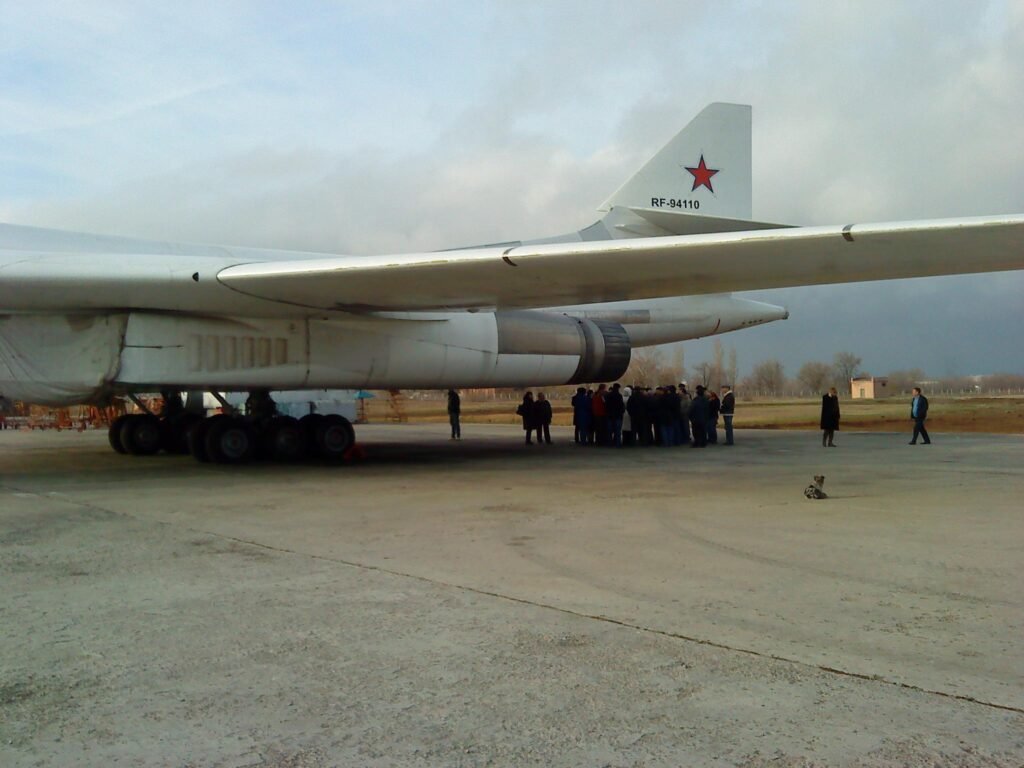
Russia’s strategic bombers were designed to operate across enormous distances. That range gives Moscow options, but it does not make basing irrelevant. The Tu-95MS and Tu-160 still depend on fuel, maintenance, ground crews, missile-handling equipment and suitable airfields. As Ukrainian long-range strikes have expanded, those requirements have created a difficult trade-off for Russian planners.
The basic choice is straightforward. Aircraft can be dispersed farther east, reducing their exposure to Ukrainian drones, but longer transits increase flying hours, maintenance demands and logistical complexity. Bring the aircraft back toward western staging bases, and the missions become easier to support—but the bombers spend more time within reach of Ukrainian long-range weapons.
Engels Has Become A Test Of That Trade-off
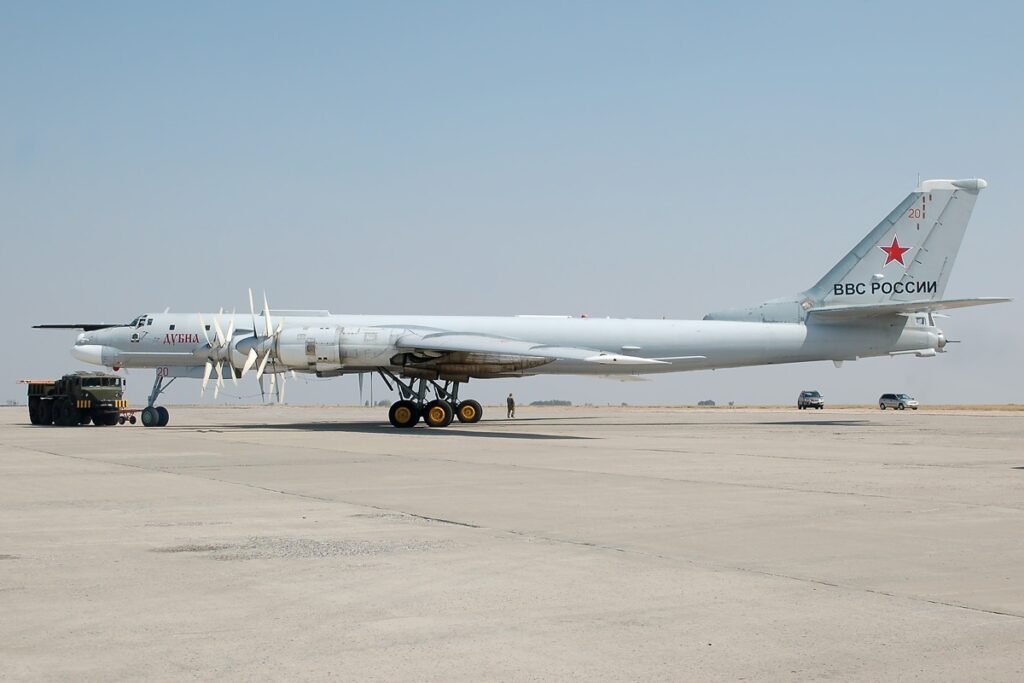
In late August 2026, Ukraine’s Security Service said its long-range drones struck a Tu-95MS strategic bomber at Engels-2 air base in Russia’s Saratov region. Open-source analysts subsequently published satellite imagery that appeared to show severe damage to the aircraft’s right wing. The Institute for the Study of War separately assessed that Ukrainian forces had struck a Tu-95MS at Engels and noted the satellite imagery showing wing damage.
The exact long-term serviceability of any damaged aircraft is ultimately a technical question, and wartime assessments should be treated cautiously. But the event matters even without assuming the most dramatic damage estimate. Engels is a major base for Russia’s long-range aviation and supports aircraft used in cruise-missile strikes on Ukraine. A strike there forces Moscow to protect not only the bombers themselves but also the infrastructure that keeps them operational.
That infrastructure is difficult to duplicate everywhere. Strategic bombers require specialized servicing, weapons handling, fuel and experienced ground crews. Moving aircraft is therefore easier than moving an entire operational ecosystem.
MOVING EAST IMPROVES SAFETY, NOT EFFICIENCY
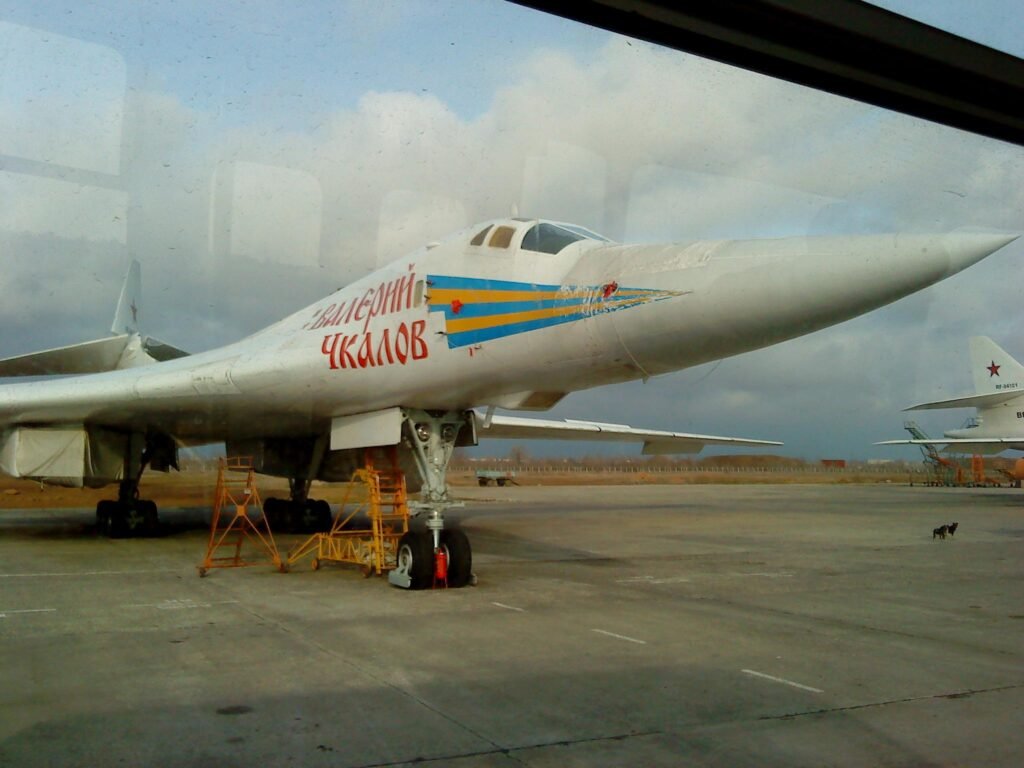
After previous Ukrainian attacks on Russian air bases, satellite imagery and open-source reporting showed strategic aircraft dispersed to more distant locations, including bases in the Russian Far East. This is a logical force-protection response: greater distance complicates Ukrainian attack planning and reduces the number of systems capable of reaching the aircraft.
But distance creates its own costs.
A bomber flying thousands of additional kilometers accumulates more airframe and engine hours. Crews spend longer in transit. Maintenance cycles become more demanding. Support equipment and spare parts must be positioned across a larger network. If a remote base lacks the full missile-loading and heavy-maintenance infrastructure of a major strategic aviation hub, the aircraft may still have to rotate through better-equipped bases before or after combat missions.
That is why dispersal is not the same as removing vulnerability. It changes where the vulnerability appears.
The Value Of A Fixed Support Hub
Engels matters because it combines runways, fuel, maintenance, weapons support and trained personnel in one place. Concentrating those functions makes operations efficient. It also creates a predictable node that can be studied.
For Ukraine, the strategic opportunity is not simply to destroy an aircraft. It is to complicate the cycle that allows Russia to generate repeated bomber sorties. A strike that forces dispersal, interrupts maintenance or requires additional air defenses can impose costs even if most of the base remains functional.
For Russia, the response is to make the hub harder to hit without sacrificing the advantages of using it.
Russia Is Building Physical Protection
Satellite imagery reviewed by The War Zone in mid-2026 showed at least 17 large protective shelters under construction at Engels. The structures are substantially larger than shelters normally used for tactical aircraft and are sized for strategic bombers such as the Tu-95MS and Tu-160.
The construction illustrates how the threat environment has changed. For decades, distance itself provided much of the protection for Russia’s heavy-bomber fleet. Repeated Ukrainian strikes mean expensive aircraft parked deep inside Russia increasingly require the kind of hardened protection normally associated with more exposed bases.
Shelters can reduce vulnerability while aircraft are parked, but they do not solve every problem. Bombers still have to leave cover to taxi, refuel, undergo some forms of maintenance and conduct missions. Fuel storage, ammunition handling and other support facilities remain part of the wider target set.
The Tu-95ms Is Especially Difficult To Replace
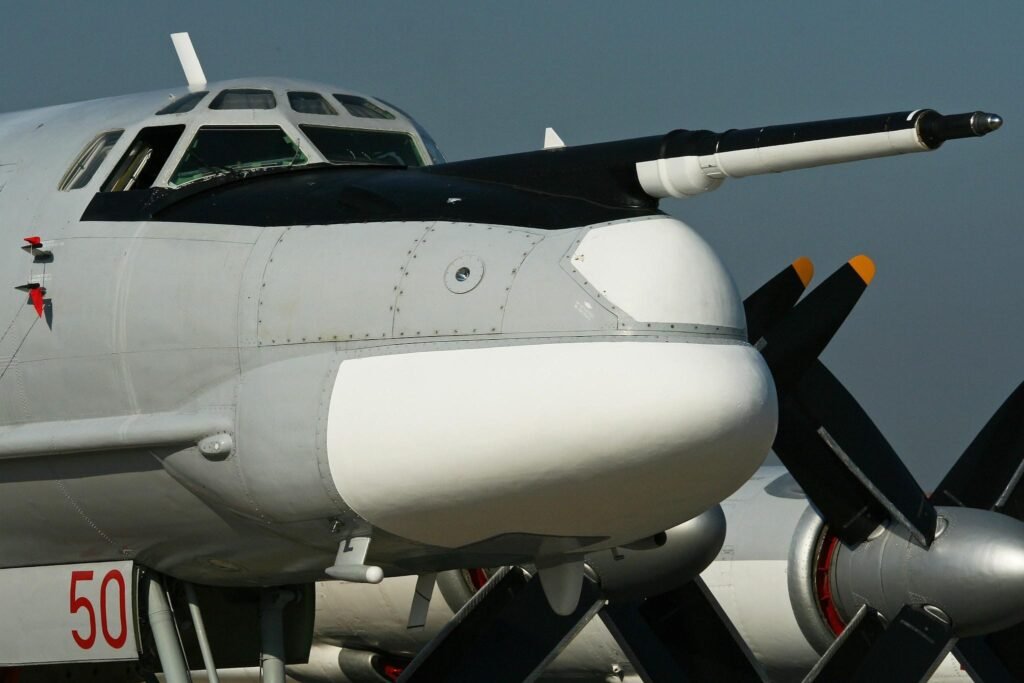
The Tu-95MS is a Soviet-era aircraft whose serial production ended decades ago. Defense-industry reporting cited by multiple specialist outlets says the production line was dismantled after production ended in the 1990s. Russia can repair aircraft, cannibalize parts and extend service lives, but it does not have a current production line turning out new Tu-95MS airframes.
That makes major losses different from losses of equipment that is still in serial production.
The size of Russia’s flyable strategic-bomber inventory is disputed, and public estimates vary. It is therefore safer to focus on the underlying constraint: every old airframe requires maintenance, spare parts and structural life management, while replacement capacity is limited.
For Ukraine, attacking aircraft on the ground can be attractive because it attempts to remove a missile-launch platform before it can generate repeated future sorties. For Russia, preserving the fleet means spending more on dispersion, shelters, local air defense and maintenance.
THIS IS AN ADAPTATION CONTEST, NOT A ONE-WAY COLLAPSE
Russia still retains strategic bombers, long-range missiles and a large support network. Engels has not ceased to function, and moving aircraft farther east does not make them unusable. Moscow can improve shelters, deploy more air defenses, change parking patterns, use decoys and alter operational routines.
Ukraine faces its own constraints. Long-range drones must penetrate a large defended airspace, reach the correct target and carry enough payload to cause meaningful damage. Russian electronic warfare and air defenses can intercept or divert many of them.
The significance of the campaign therefore lies in the adaptation cycle.
Ukraine looks for predictable routines and exposed infrastructure. Russia disperses, fortifies and changes procedures. Ukraine then searches for the next weak point. The outcome is not determined by one spectacular strike but by which side can adapt while preserving operational tempo.
Why The Basing Problem Matters
Strategic aviation is only useful when it can generate missions. An aircraft protected thousands of kilometers from the battlefield is safer, but safety has limited value if every sortie becomes slower, more expensive and harder to support. A bomber positioned closer to its preferred staging infrastructure is easier to use, but more exposed.
That is the dilemma Ukraine is trying to sharpen.
Russia does not have to choose one permanent answer for its entire bomber force. It can rotate aircraft, vary routes and distribute support. But every added layer of protection consumes resources and makes operations more complex.
The deeper point is that geography is no longer a free defensive asset. Distance still helps Russia, but Ukraine’s expanding strike range increasingly forces Moscow to pay for that protection in fuel, maintenance, infrastructure, air-defense coverage and operational flexibility.
For Engels, that means the base remains useful precisely because it is difficult to replace. And that is also what keeps it on Ukraine’s target list.